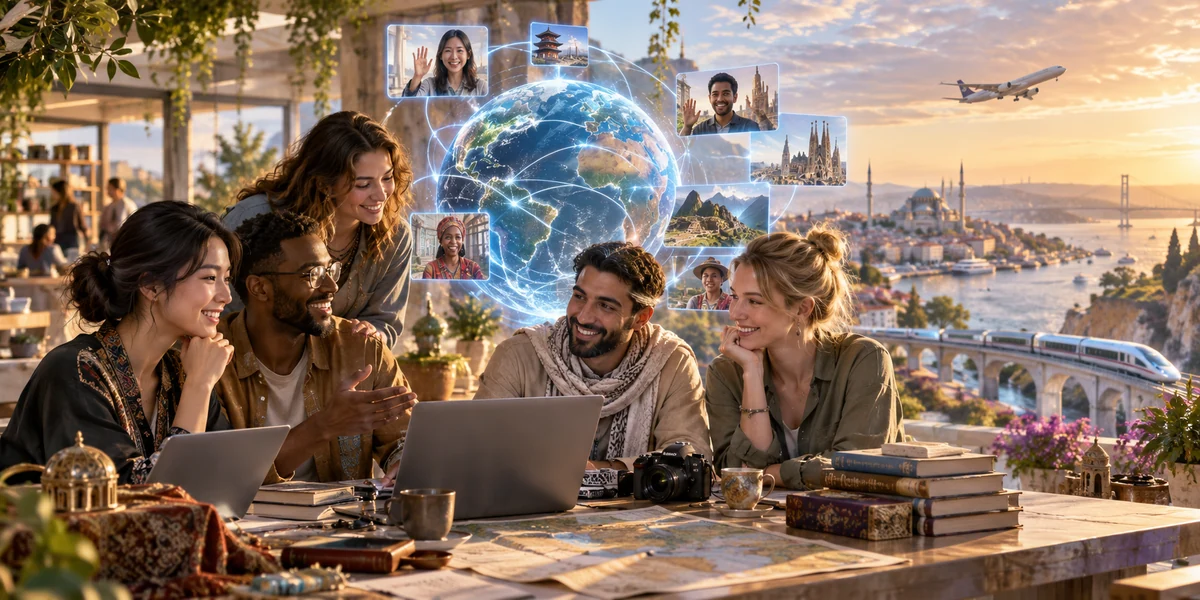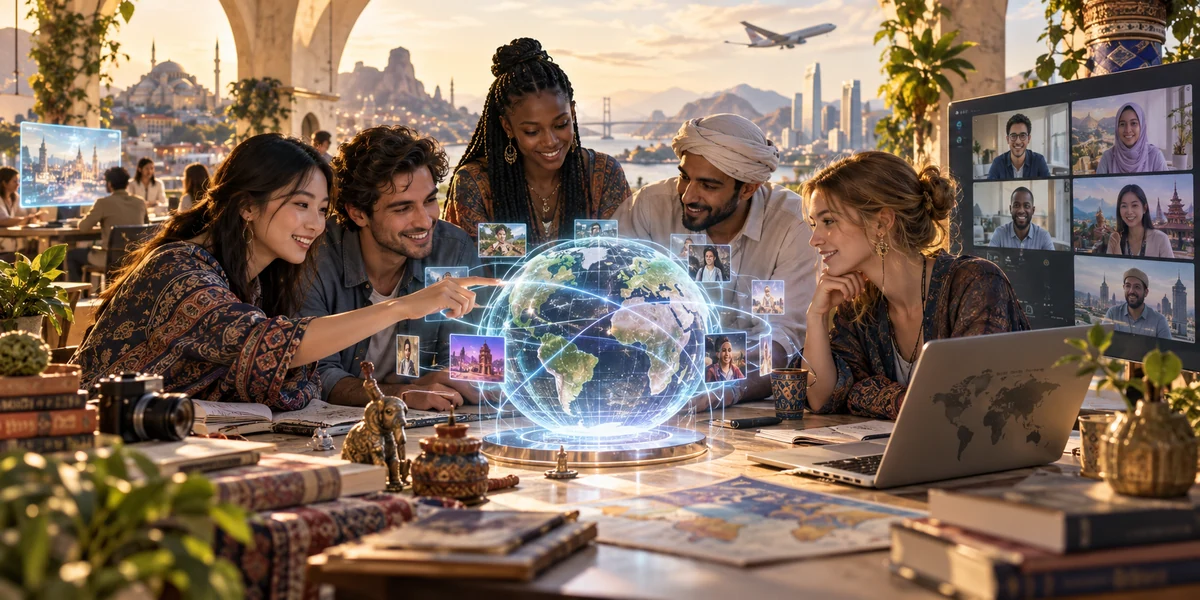
The world we live in today is no longer the same as it was just a few decades ago. The internet, artificial intelligence, airplanes, and high-speed transportation have broken down boundaries that once seemed insurmountable. Today, distances no longer divide us — on the contrary, they connect us, turning the planet into a unified space where ideas, cultures, and people interact faster than ever before.
Technology is erasing language barriers. Automatic translators and artificial intelligence have made instant communication between people speaking different languages possible. What once required effort and time now happens in seconds. We are beginning to understand each other better, to share our thoughts and feelings regardless of where we are. This is more than just convenience — it is a step toward global mutual understanding.

Airplanes and new forms of transportation have changed our perception of distance. Crossing an ocean once felt like a great achievement; now it is simply a matter of a few hours. We do not just travel — we experience new cultures and meet people who once seemed distant and incomprehensible. This not only broadens our horizons but also teaches us to accept and appreciate diversity.
The internet has opened access to the world’s knowledge. Today, we can study languages, art, traditions, and histories of other peoples without leaving our homes. Every click provides an opportunity to learn more about what was once hidden behind geographical or cultural boundaries. This makes us not only more informed but also more open to new perspectives and ideas.
New technologies are shaping a culture of collaboration. Thanks to digital tools and platforms, people from different parts of the world can work together on projects, creating something unique and meaningful. This teaches us to see value in what each of us brings to the collective process, regardless of origin or culture.
The world has become more connected, but this also brings new responsibility. The convergence of cultures requires not only openness but also respect for the uniqueness of every nation. Technology provides the tools for interaction, but it is our intentions that determine how harmonious and productive this interaction will be.
We live in an era of great opportunities. The internet, AI, airplanes, and high-speed technologies do more than connect us — they help us learn from each other, overcome stereotypes, and build a world based on mutual understanding and respect. This process of convergence makes us stronger, spiritually richer, and helps us realize that despite our differences, we are all connected.