Fear is not merely an emotion but a consequence of forgetting one’s true nature. When a person forgets who they truly are, the illusion of separation arises. We begin to identify ourselves with the body, roles, and personal stories, mistaking the temporary for the permanent. It is from this sense of disconnection that fear emerges, nourished by the loss of connection with our deeper essence.
At the core of most fears lies the fear of loss and impermanence. We fear losing something forever because we perceive ourselves as limited forms. Fear grows not because of uncertainty itself, but because of the belief that everything can disappear without return. From this come anxiety, the need for control, and the constant search for guarantees of safety.
Fear acts even before action begins. It can stop an impulse before it becomes a decision or a step forward. A person may not even have time to form a dream or intention before an inner voice says, “It’s impossible.” In this way, fear limits not only actions but also the ability to see possibilities, gradually turning life into an attempt to avoid pain rather than a journey of growth.
When fear becomes the primary motivation, life shifts into survival mode. Choices are no longer guided by love and curiosity but by the avoidance of threats. Movement gives way to caution, and the search for truth is replaced by the search for security. Temporary happiness built only on the absence of problems remains fragile and can easily collapse when external circumstances change.

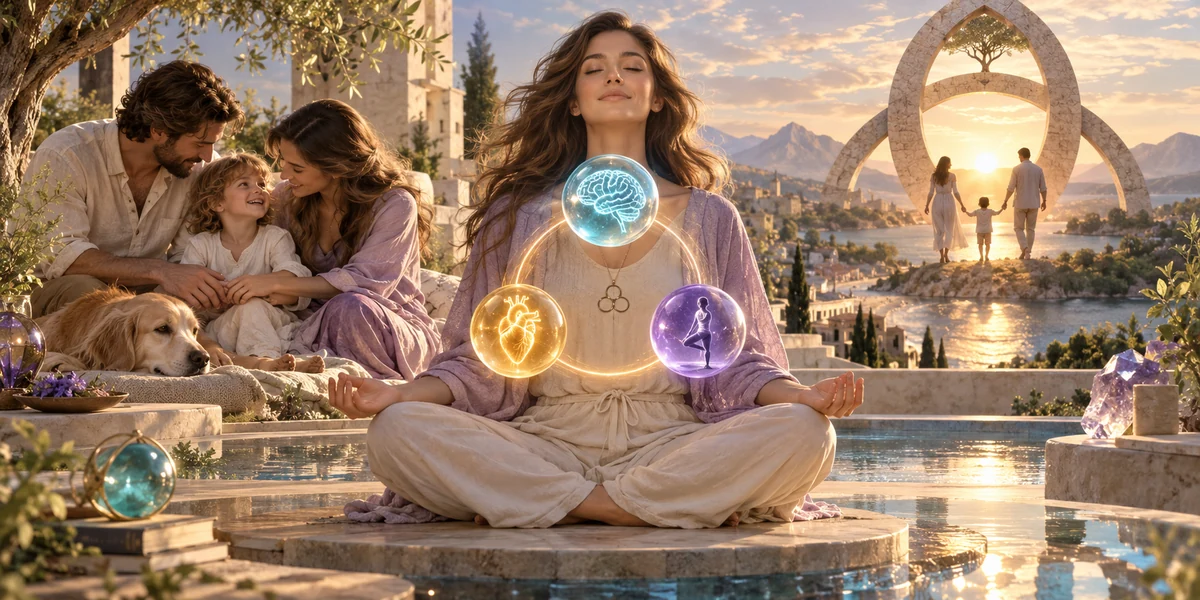
True happiness is born not in the outer world but within. It arises when a person stops running from themselves and returns to a state of inner peace. This is neither euphoria nor the absence of challenges, but a deep stability that remains present in both calm and change. Happiness is not created through effort—it is remembered as a natural state of being.
Love is not the opposite of fear; separation is. Where the sense of connection with life is restored, fear gradually loses its power. Everything in the universe is in a constant process of movement and transformation. Forms change, yet the flow of life continues. Realizing this interconnectedness helps us move beyond a worldview based on limitation and finality.
The path to freedom begins not with fighting fear but with returning to oneself. Fear does not need to be destroyed; it needs to be understood. Inner courage is not the absence of fear but the presence of knowledge that prevents fear from taking control. The more clearly a person remembers their deeper foundation, the less need there is for defense and the more space opens for freedom, trust, and forward movement.